
The London Insurance Market, a global hub for specialty insurance and reinsurance needs to pivot toward digitalisation. Historically defined by face-to-face negotiations, extensive paperwork and manual verifications, the industry has shown a heavy reliance on legacy systems. Such a reliance has led to data management and integration issues, cybersecurity and compliance concerns and a lack of digital skills among other woes. Deloitte notes that outdated core platforms can consume up to 70% of IT budgets in maintenance, while PwC highlights that legacy inefficiencies can erode profitability by billions annually.
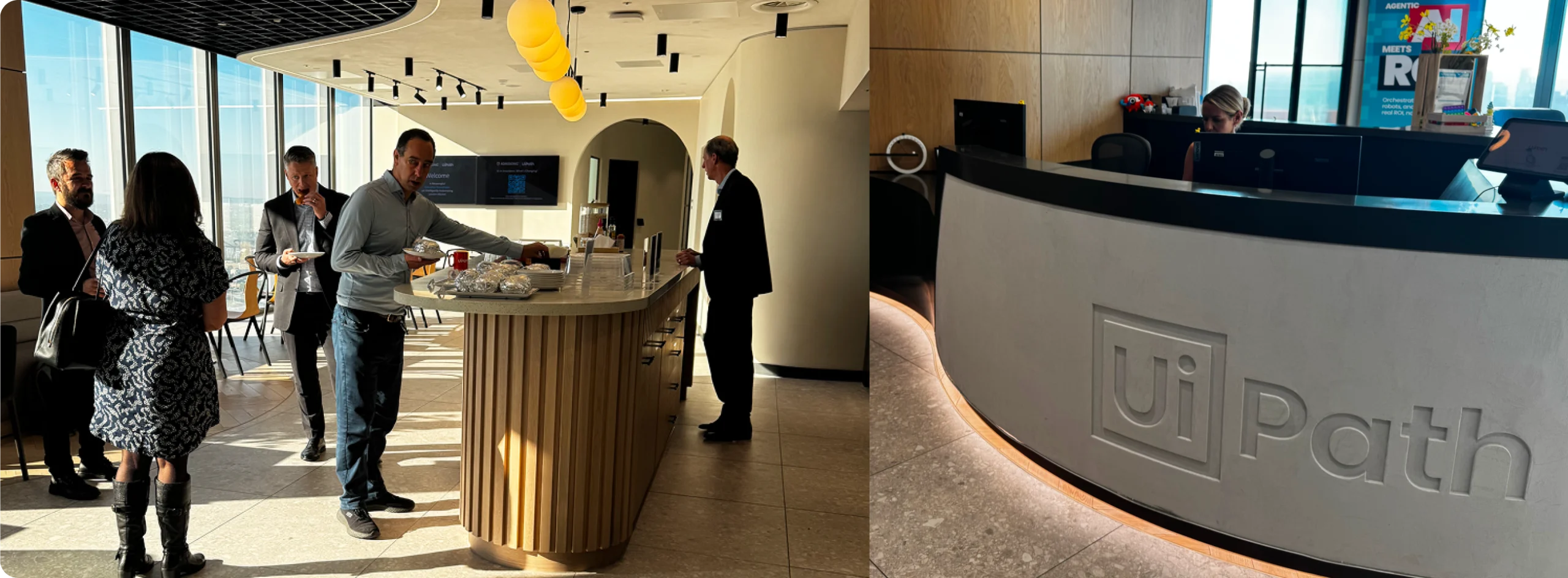
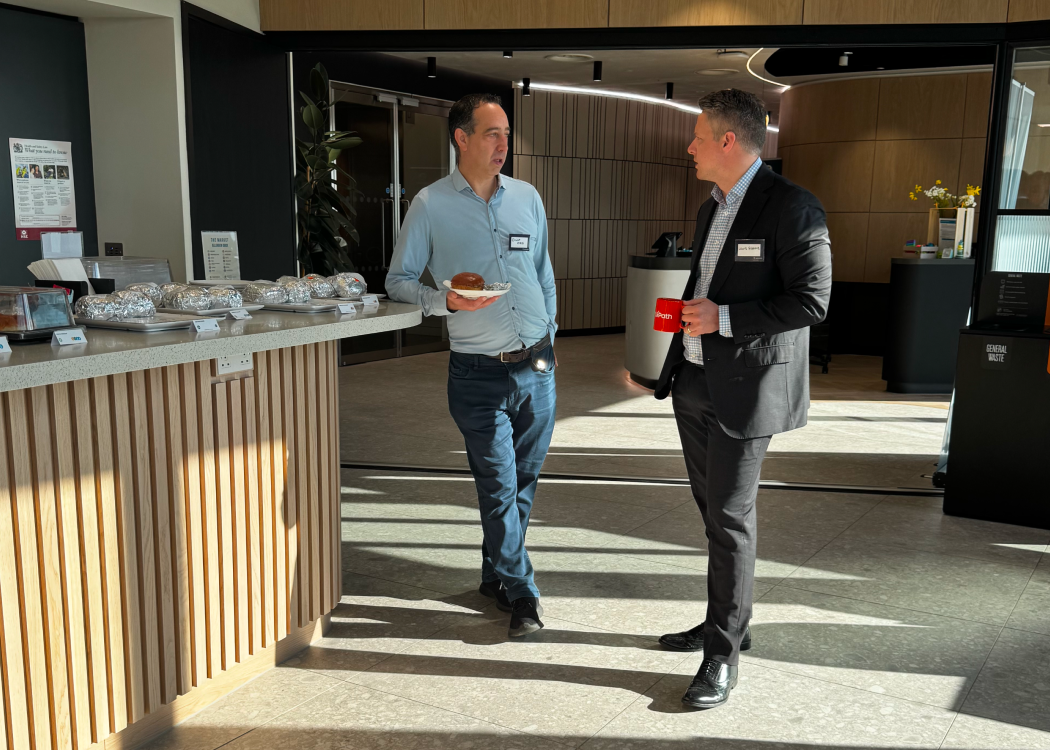
However, the market is now aggressively pivoting towards intelligent automation. On April 30, 2026, ADROSONIC and UiPath convened an executive roundtable in London. The focus was on how insurers and underwriting firms are moving beyond simple task automation toward sophisticated, agentic AI ecosystems.
Roundtable Executive Summary: Navigating the Top 10 London Insurance Market Pain Points
- Legacy Technical Debt
Legacy systems struggle to support complex specialty risk data, forcing teams into spreadsheet-heavy workflows and slowing underwriting decisions.
Solution: Adopt API-first modernisation strategies that extend legacy systems without disruptive replacement. - Manual Administrative Burden
Highly skilled underwriters spend excessive time on repetitive administrative tasks instead of high-value risk evaluation and broker engagement.
Solution: Automate document processing and data extraction to increase underwriting capacity and operational efficiency. - Mixed Digital Maturity
Different levels of digital maturity across syndicates create fragmented workflows, inconsistent processing and delays across the market ecosystem.
Solution: Adopt unified standards and interoperable digital processes to enable seamless collaboration across carriers and brokers. - KPI and ROI Measurement Gaps
Many firms struggle to connect digital investments to measurable underwriting, operational and business outcomes.
Solution: Implement outcome-based tracking tied to underwriting efficiency, risk selection and operational performance. - Unstructured Email Data
Risk submissions arrive in fragmented formats across emails, PDFs and spreadsheets, creating delays, data gaps and manual rework.
Solution: Use intelligent automation, predictive AI and LLMs to classify emails, extract data and identify missing information in real time. - Data Ingestion Challenges
Risk data arrives in inconsistent formats, creating heavy dependence on manual processing and slowing the policy lifecycle.
Solution: Use AI and Intelligent Document Processing (IDP) to extract, validate and structure data before it enters downstream systems. - Process Orchestration Bottlenecks
Disconnected systems and siloed workflows force manual handoffs across underwriting, claims and compliance teams.
Solution: Introduce AI-driven orchestration and automated routing to streamline workflows from submission to claims. - Human-in-the-Loop Complexity
Specialty underwriters spend excessive time on manual data extraction, validation and re-entry instead of decision-making.
Solution: Deploy LLMs and machine learning to extract, structure and validate data automatically, enabling experts to focus on risk assessment. - Scaling PoC’s to Production
Many PoC’s succeed in isolation but fail at scale due to interoperability, compliance and integration challenges.
Solution: Scale incrementally through focused use cases, phased integration and structured AI adoption programmes. - Rising Operational Costs
Inflation, borrowing costs and reinsurance pressures continue to increase operating expenses and reduce profitability.
Solution: Intelligent automation reduces manual workloads, improves efficiency and lowers operational costs across underwriting and claims.Additional pain points discussed during the roundtable included cultural resistance to AI, siloed business units, shadow AI risks, portal fatigue and preserving the relationship-led expertise that differentiates the London Market.
UiPath Perspective:
The technical landscape is shifting from traditional Robotic Process Automation (RPA) to Agentic AI. While robots follow rigid, predefined processes, agents learn and adapt. In this ecosystem, AI and agentic models improve operational efficiency of insurance firms internally. By automating non-complex tasks, firms can improve margins without additional cost overruns. Introducing AI directly into the underwriting processes empowers underwriters, allowing them to focus on complex cases, while leaving the simpler tasks to automation.
ADROSONIC’s Take:
The future of the London Market depends on how it can strike a balance between maintaining its relationship-led expertise and modernisation. Beyond fragmented automation initiatives, insurers must collectively move towards connected intelligent ecosystems that bring data, decision-making and workflows on to a unified platform. The next competitive advantage is set to be unlocked not by digitisation alone but the confluence automation, AI and operational agility to drive measurable business outcomes.
The Bottom Line:
Legacy processes built the market. Intelligent automation will transform it, keeping human in the loop.
Automation is rapidly transitioning from a back-office efficiency tool to a front-office reality. While this shift offers immense potential, the consensus from our roundtable was clear: technology must serve the relationship, not replace it
Are you facing these same challenges in your operations? If these pain points reflect the hurdles your team is currently navigating, let’s talk. Explore what’s next with ADROSONIC and join our future conversations to help shape the London Insurance Market.
Author